


PULE – A LIVING CONNECTION

Updated: Sep 22

Understanding Pule
Across cultures and throughout human history, people have prayed. Prayer has been whispered in critical moments, spoken in churches, sung and chanted in temples, offered beside the sick and dying, and held silently within meditation. The language, rituals, and beliefs surrounding prayer may differ greatly, yet the impulse remains consistent. Human beings have always sought connection with something greater than themselves.
Within Hawaiian understanding, Pule is often translated as prayer, blessing, or sacred communication. However, these translations only partially capture its meaning. Pule is not simply the recitation of words or a request directed toward a higher power. It is a practice of relationship — a way of communicating with Akua (spirit), Aumakua (ancestral guardian spirits), and the unseen forces that connect and sustain life.
My own understanding of Pule and prayer has continued to evolve through experience, learning, and relationship. While my Catholic beginnings taught me the value of ritual, intention, and relationship with the divine, my encounters with Hawaiian concepts of pule opened my awareness to prayer as something deeply connected with land, ancestors, nature, and responsibility.
Kūkuipuka – a living Heiau
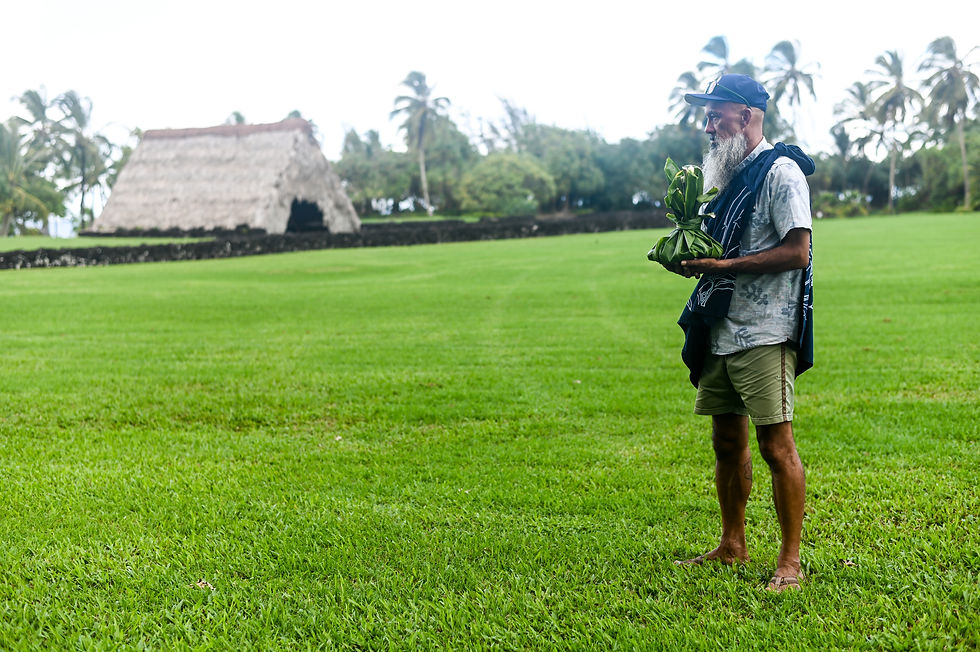
One of the most profound experiences that shaped this understanding was visiting Kūkuipuka, a sacred heiau (Hawaiian temple) located in Kahakuloa, Maui. Entering Kūkuipuka was not simply a visit to an historical place; it was an experience of entering a living relationship between people, land, ancestors, and spirit.
A heiau is sacred place of prayer, ceremony, and connection. At Kūkuipuka, respect and protocol are central to entering the space. Visitors enter barefoot and in silent reverence. Natural offerings may be brought as ho‘okupu - offerings for Akua/Aumakua, made of natural items, wrapped in ti leaves. Silent prayer or intention itself is also considered an offering. The emphasis is not on what is physically given, but on the mana (energy), pili (relationship) and kūpaʻa (respect) carried into the space.

The history of Kūkuipuka deepens its meaning. In 1995, the Kūkuipuka ‘Ohana (family) rediscovered this sacred heiau in Kahakuloa and began the process of restoring and regenerating the site. Traditionally, it was understood as a pu‘uhonua - a place of refuge where someone who had broken sacred laws under the kapu (forbidden laws) system could seek forgiveness, sanctuary, and restoration through pule rather than punishment. Today, Kūkuipuka continues to be regarded by many Kānaka Maoli (Native Hawaiian people) as a place for pule, healing, peace, ho’oponopono (forgiveness), and connection with ancestors and spirit.
The name itself carries meaning. Kūkuipuka is translated as “doorway to the light” or “gateway to enlightenment,” combining kūkui (candlenut tree, associated with light and enlightenment) and puka (doorway, opening, or portal). For me, this became a powerful metaphor for understanding pule itself, as an opening into deeper awareness, relationship, and connection. Pule is connected to place, responsibility, nature, or relationship. Pule carries intention, acknowledgement, gratitude, and responsibility. It recognises that human beings exist within a larger network of relationships: with spirit, family, ancestors, the natural world, and with one another. Through pule, these relationships are honoured and strengthened.
Pule in Hawaiian Tradition: Prayer as Relationship and Reciprocity
Pule is a lived practice woven into everyday life, ceremony, and relationship. It reflects an understanding that human beings exist within a larger network of connection. It is not separate from daily life but integrated into how people move through the world.
Traditionally, Hawaiian pule was deeply connected to place, protocol, and responsibility. Some forms were formal chants carefully preserved and passed through generations. These compositions honoured specific kinolau (physical manifestations or forms through which akua are experienced, such as plants, animals, weather, or natural phenomena) and aumakua. Through these prayers, histories, relationships, and responsibilities were remembered.
Other pule were more spontaneous and arose from particular moments. A person gathering pala‘ā fern for lei (floral wreath) making, for example, might offer acknowledgement and ask permission from Hiʻiaka, a goddess representing growth and healing, before taking from the land. This pule recognises that taking from nature is not simply a physical action but a relationship requiring respect, gratitude, and reciprocity.
Traditional pule often followed a structure:
Recognition and acknowledgement of the akua, including names and kinolau.
Clear expression of intention and purpose.
Ho‘okupu (offering), which gave physical expression to prayer and relationship.
Closing with mahalo (gratitude).

A ho‘okupu was not separate from prayer but an extension of it. Offerings could include food, plants, fish, ʻawa (water), pa’akai (sea salt), flowers, or other items connected to the purpose of the pule. Through offering, the person acknowledged reciprocity with Akua, ancestors, and the natural world.
Pule became something enacted, not only spoken. This reflects a fundamental understanding within Kānaka Maoli knowledge systems: people depend upon akua, ancestors, ʻāina (land), and moana (ocean) for life and also have responsibilities to care for and honour these relationships through reciprocity. Pule exists within this exchange. It is both communication and commitment.
In larger ceremonial settings, pule was performed at heiau - sacred temples dedicated to the wellbeing of individuals, communities, and the nation. A kahuna pule (master of prayer) would lead ceremonies, while the aliʻi (chiefs and hereditary leaders) held responsibility for governance and social order.
During ceremony, silence was essential. Disruption, whether human or natural, was believed to interrupt the sacred communication taking place. Families also created smaller sacred spaces where prayer, offerings, and connection could occur. These spaces provided places of refuge and reflection, where people could acknowledge their relationships with akua, ancestors, and one another. Prayer can exist wherever there is intention, awareness, gratitude, and connection.
The disruption of traditional Hawaiian practices
The arrival of foreign missionaries in Hawaiʻi from 1820 onwards brought significant changes to Hawaiian spiritual and cultural life. Many Hawaiians converted to Christianity, and Christian forms of prayer became integrated into Hawaiian communities. At the same time, colonisation, Western governance systems, and missionary education contributed to the suppression and displacement of many traditional cultural practices.
By 1896, speaking ʻŌlelo Hawaiʻi was outlawed, bringing a dramatic decline in the language. Restrictions were also placed on many aspects of Hawaiian cultural and communal life. These changes deeply affected how pule was publicly practised. However, they did not erase it. In the 1970s, Hawaiians began a powerful cultural revival that became known as the Hawaiian Renaissance. In 1978, the Hawaiʻi State Constitution was amended to recognise ʻŌlelo Hawaiʻi as an official state language, and in 1986 the 90-year school ban was repealed, the following year seeing the start of immersions programs in schools.
Like many living traditions, pule adapted. It continued through families, communities, and individuals who maintained ancestral practices while sometimes also engaging with new religious frameworks. In some ʻohana, traditional forms of pule were carefully preserved and passed through generations. In others, prayer developed through blended expressions, incorporating Christian and Hawaiian understandings.
This continuity reflects the strength and adaptability of Hawaiian spirituality. Pule was never only a ritual form; it was a relationship. Relationships can change in expression while maintaining their essence.
Today, pule continues to be offered in many forms. It may occur in homes before meals, before sleep, during times of difficulty, or during community gatherings. Elders, adults, and children may all participate in prayer within their families. Many contemporary Hawaiian communities continue to honour both church-based worship and traditional practices connected to land, ancestors, and ceremony.
Sacred places such as heiau continue to hold significance. Some remain as historical sites, while others continue as living places of connection, healing, and cultural practice.
Pule, Hā and Healing Through Lomilomi
For me, pule has become both ritual and lived practice. I begin each day with pule. It is a moment to gather myself, set intention, and remember my kuleana (responsibility) - to my family, my community, my work, and the wider world around me.
Some of my pule is simply a way of connecting with Akua, and to build my pa’a (unshakeable foundation). Some is directed toward specific kūpuna (elders) and aumakua (ancestral spirits), including my maternal grandmother, who has passed from this life but remains present through memory, spirit, and relationship. Pule brings her into the room and I can seek her guidance in challenging times.
I also find connection through the natural world: birds that cross my path, the moon, trees; the moments when something in nature captures my attention and reminds me that I am part of something greater. A spoken word of acknowledgement to these signs can make me feel at one with the universe and restore my pa’a in times of unbalance.
When life becomes difficult, pule becomes a place of guidance and surrender. It allows me to ask for wisdom, support, and clarity while recognising that I do not carry everything alone. I offer pule for others as well - asking for aloha (unconditional love), strength, healing, and support for those who may be experiencing challenges.
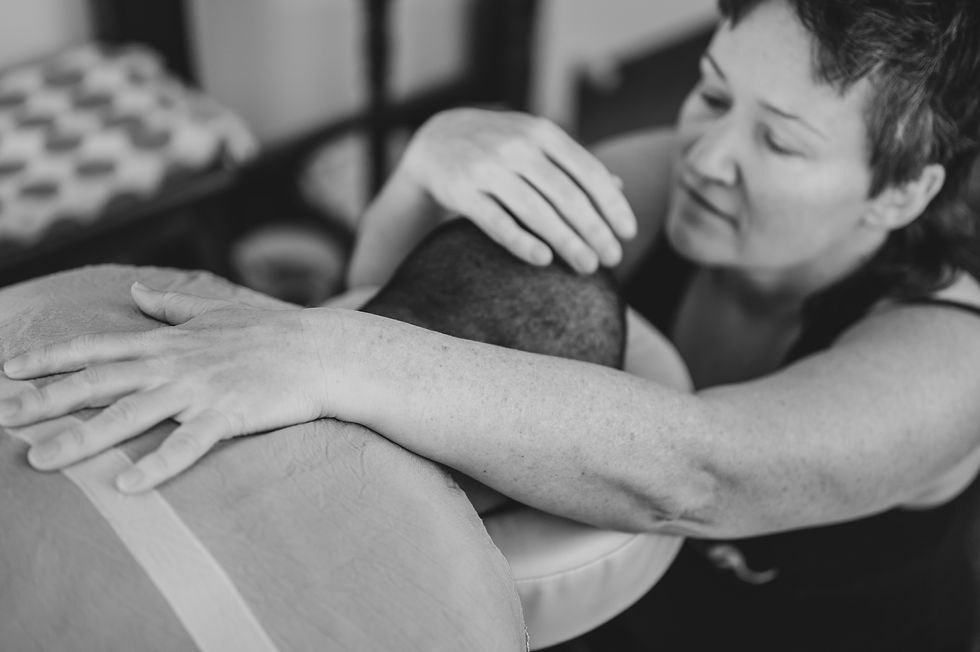
Within my practice of Spiritual Hawaiian Lomilomi, pule is essential. Before a session begins, pule creates sacred space and sets intention. It acknowledges the connection between Akua, the practitioner, and the receiver. The practice is understood not simply as a physical process but as something relational and spiritual.
This relationship is often described through the concept of aka. Aka refers to the invisible connections that link people, thoughts, intentions, and all things within creation. These connections allow the movement of mana (energy) and acknowledge that we are never truly separate. Through the acknowledgement of pule, these relationships are honoured and strengthened. It reminds us that healing does not occur in isolation. It occurs through connection - between people, between body and spirit, and between the seen and unseen worlds.
At the conclusion of a Lomilomi session, I offer pule to acknowledge what has taken place and to send the receiver forward with love, light, and continued guidance. An example of simple pule to send the receiver forth might be: E pili mai, e aloha mai, e lokahi mai, e pono mai, e mana mai, which asks that they continue their journey with presence, love, harmony, rightness and energy.
Sometimes pule naturally arises during the session itself. When emotions surface, I may call upon aloha to support the process and create safety for expression. When someone is beginning a new journey, I may call upon mana to support their strength and intention. When someone is seeking balance between thoughts, emotions, and spirit, I may call upon Lōkahi or Pa’a - harmony and alignment.
Pule and Lomi is often accompanied with breath. In ʻŌlelo Hawaiʻi, hā translates literally as breath or the breath of life. However, it represents much more than a biological function. Hā is understood as a vital connection between life, spirit, ancestors, and Akua. Breath carries presence and intention. It reminds us that every living being shares the same fundamental rhythm of existence. This understanding of breath is universal. Across cultures, breath is associated with spirit and life force. Meditation, prayer, chanting, and healing practices throughout the world often return us to the breath because breath brings us back to the present moment.
In Hawaiian culture, people share the breath through Honi – a greeting where the forehead and nose are pressed together, and a breath is shared. This is to signify a connection of the two people sharing the Honi – their life breath and spirit.
One of the most powerful things I have observed through offering Lomilomi is how people respond to pule and breath, even when they do not understand the language. The sound of pule, the rhythm of breathing, and the energy and intentions behind them can create calm, safety, and connection.
Hā breath can signify the end of a sequence, the clearing of energy from the body with long sweeping strokes, and it can often serve as an automatic trigger for the receiver to take and release a deeper breath, which physiologically supports the work.
In these moments, pule becomes more than words. It becomes a shared experience.
Pule as Relationship
Ultimately, pule is a practice of connection and relationship that has continued across generations while adapting through changing times and circumstances. Within Hawaiian tradition, pule connects people with Akua, aumakua, ‘āina, and kuleana.
Across cultures, human beings have always searched for ways to express gratitude, seek guidance, find healing, and recognise something greater than themselves. The words, rituals and languages may change. Yet the impulse remains.
Through my journey from early life religious prayer to my current, deeper understanding of Hawaiian pule, I have come to see pule not as something we do, but as something we enter into. It is a relationship - with spirit, with others, with nature, and with ourselves. It opens us to connection, responsibility, and brings awareness of and attention to the sacredness that exists within and around us.
Written by Lizzie Doyle (they/them), Senior Lomilomi Practitioner and Teacher.
To find their next Lomilomi Training visit: instituteoflivingaloha.com/training-dates-lomilomi-massage


Comments